Helping you reconnect with teens facing anxiety, ASD, or ADHD
Proven tools from an experienced speech pathologist
If you've found yourself asking that question, you're not alone.
Many adults who support teens feel shut out when communication breaks down, particularly when anxiety, ADHD, autism, or everyday life challenges make conversations harder. The more important the conversation feels, the harder it can be to reach them.
I'm Telissia Gray, a practising Speech Pathologist and mum of three.
I help parents, carers, educators, and other trusted adults understand what's really getting in the way of communication, and provide the building blocks needed to strengthen connection, rebuild trust, and encourage open conversations.
Because every teen deserves to have at least one adult they feel safe talking to, about the small things, the difficult things, and the moments that matter most.


I’m a practicing Speech Pathologist who works closely with teens facing anxiety, ASD, or ADHD, and with the adults who care about them most, especially parents.
Over the years, I kept hearing the same quiet heartbreak from families: “They used to talk to me about everything. Now I get nothing.” Parents described constant power struggles, one-word answers, or discovering something was wrong only after it had escalated. Many blamed themselves or worried their teen simply didn’t trust them anymore.
In clinical sessions, I saw a different picture. These young people were not unwilling to connect. Often they were overwhelmed, unsure how to explain what they felt, or afraid of being misunderstood. When the right environment, timing, and language were used, they opened up, sometimes very quickly.
I began teaching parents the same practical approaches we use clinically, simple ways to reduce pressure, rebuild trust, and make it easier for their teen to talk. Again and again, parents told me conversations felt calmer, arguments eased, talk-anxiety dropped, and their teen started coming to them voluntarily, including about the hard things.
This 4-step approach grew out of that work. It brings together evidence-based tools, clinical communication methods, and mindset shifts that help teens facing anxiety, ASD, or ADHD feel safe enough to open up to you, even about the difficult things.
No parent wants to feel shut out from their teen’s inner world, especially during the high school years, when they may need support the most.


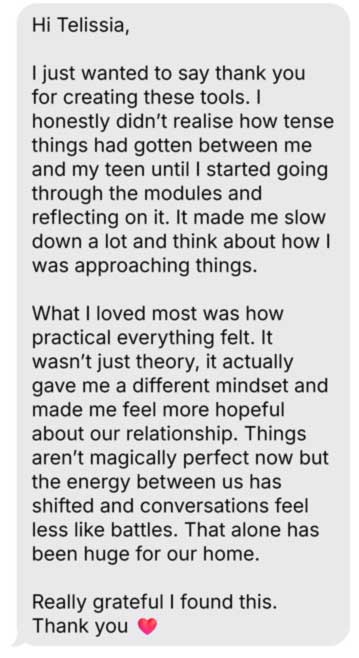
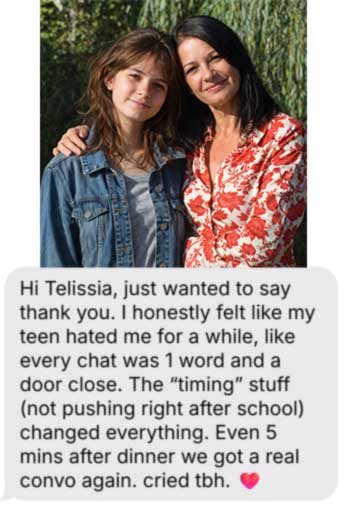
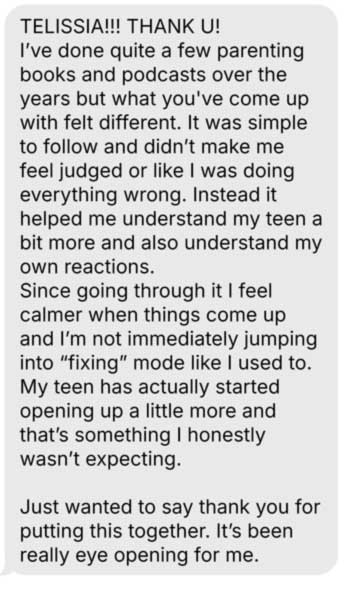
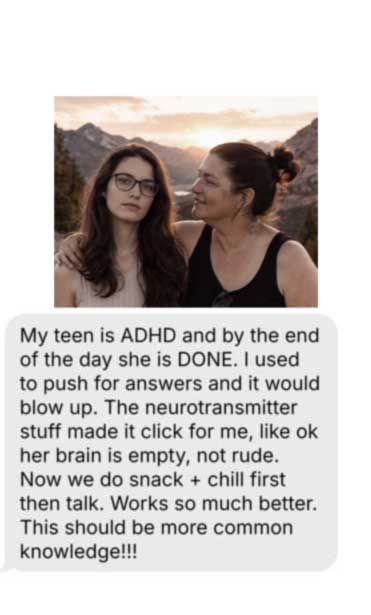
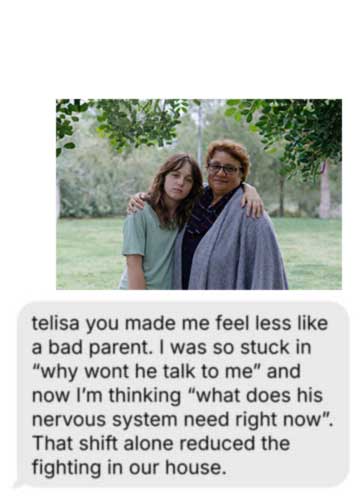
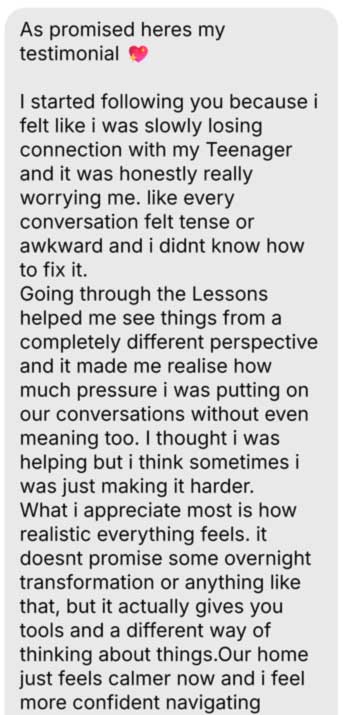
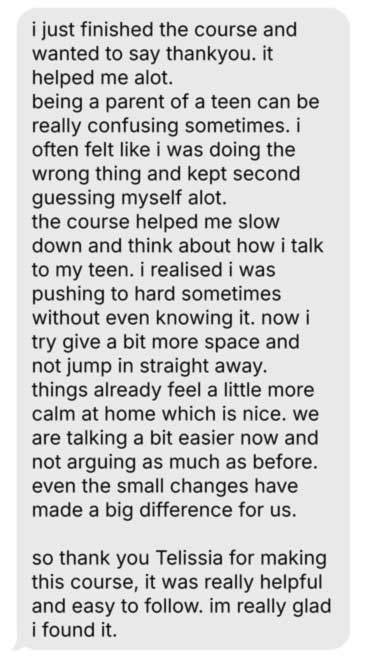

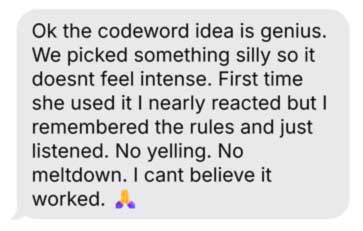
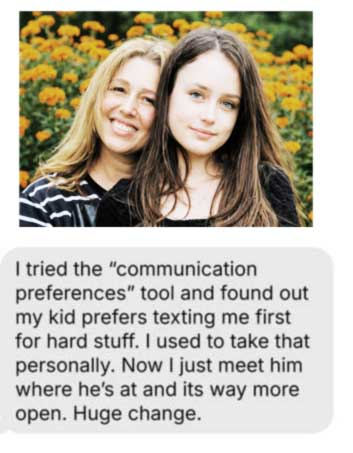
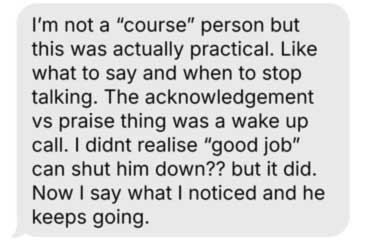
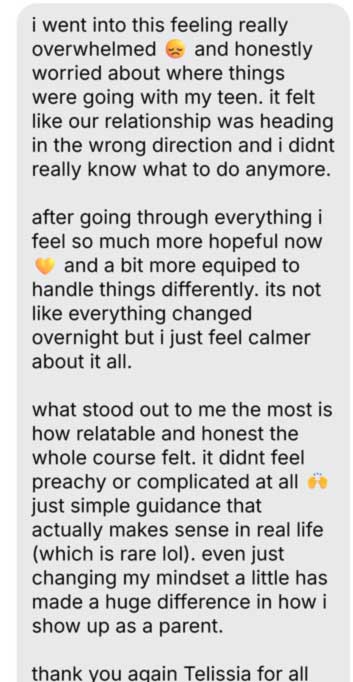
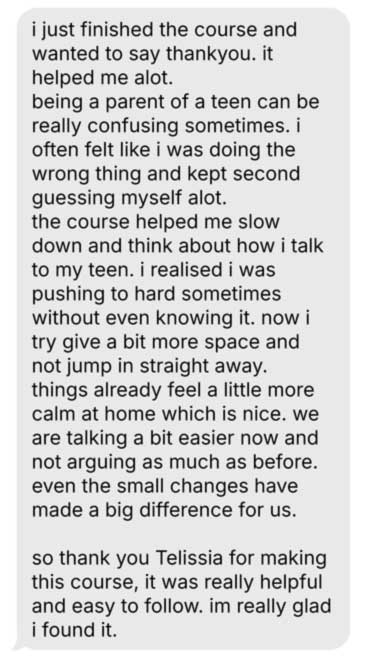
You can listen, watch, or read at your own pace, seeing changes from day one.

If conversations often end in silence, shutdowns, or conflict, this 4-step approach shows what actually helps. Learn practical, clinically grounded ways to lower pressure, rebuild trust, and get your teen talking again, even about hard topics.
PurchaseAbsolutely! The tools you will learn work perfectly well for school-age children as well.
Good news - this resource is just as effective with neurotypical teenagers.
No. This resource is suitable up to ASD level 2.
Many of my students are professionals who work with teens and see great results in their classrooms, clinical settings, care facilities, etc.
Send me a direct message: