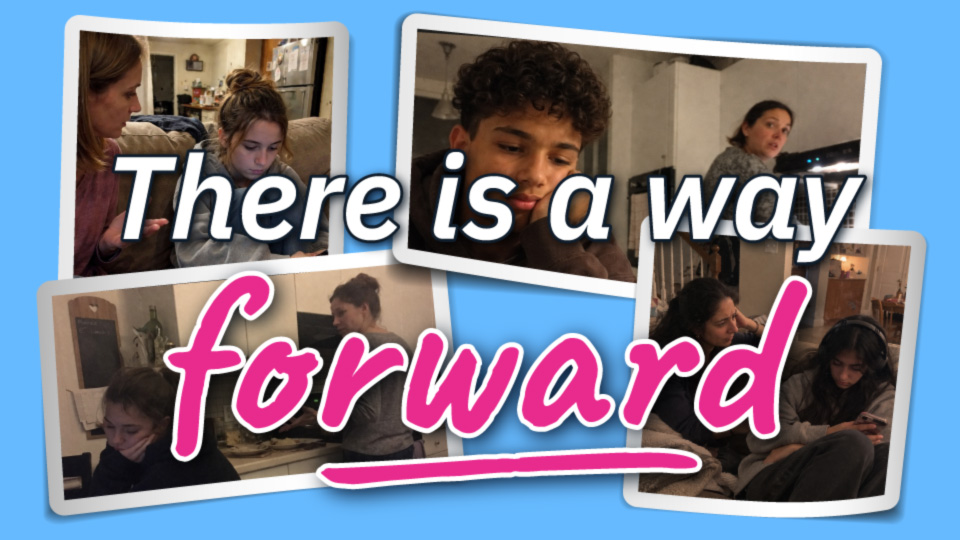
Does talking feel harder than it should? You are not alone!
Your situation is more common than you think. Adults supporting teens experiencing anxiety, ASD, or ADHD around the world face the same everyday communication challenges, and there is a way forward.
Conversations can shut down before they really start
Everything turns tense with no clear reason why
Avoids talk after school-pickup or at other specific times of the day
Hiding mistakes and problems
'Hover around' without actually talking with you
One-word or non-verbal responses
You’re second-guessing how to respond in the moment
Talks to friends or other family members, but not you
Negative talk escalates with no resolution
“I’m fine” doesn’t match what you’re actually seeing
The more you try to help, the more they pull away
You’re left unsure what actually works anymore
Proven in Practice, tested by families
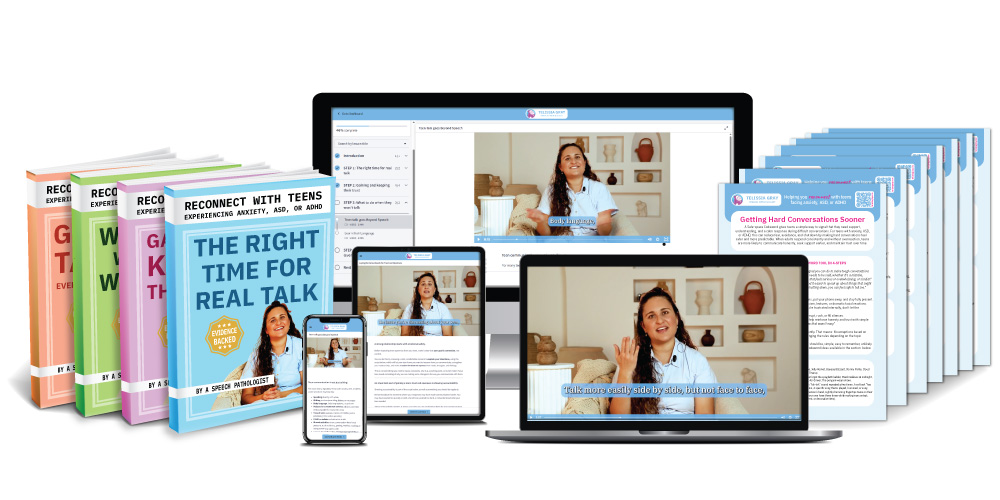
Developed through years of supporting hundreds of families, this self-paced 4-step approach cuts through the overwhelm and focuses on what works. You'll get practical, evidence-based tools that are easy to understand, realistic to apply, and designed for real life, not perfect life.
$59.00

Some outcomes you can see right away
✅ Move from communication breakdowns to productive conversations. ✅ Stop guessing and feel more confident in your approach. ✅ Learn how to spark genuine engagement. ✅ Build stronger relationships through better communication. ✅ Create the conditions for honest, meaningful conversations. ✅ Use practical resources designed for everyday challenges.
"I can't even imagine what a parent could gain from something like this"
– Dani, full-time teacher aide supporting students with ASD and vision impairment
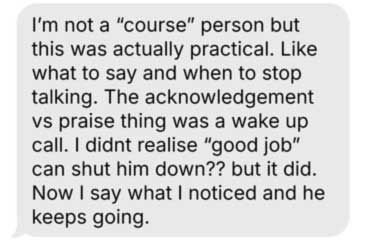
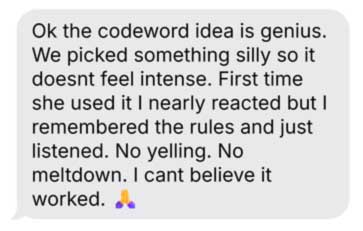
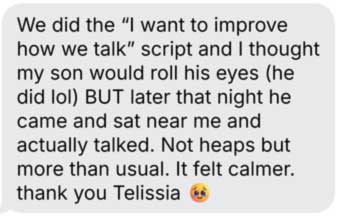
Stories from my students
See how parents and professionals are creating safer, more productive conversations and stronger connections with their teens. ⬇️

This wonderful course has been so beneficial to our family. It’s so helpful to have a few new tools we can use with our neurodivergent son. Telissia makes me feel like I’m not alone and that I can connect with my son in a way I never thought possible. I recommend this to anyone who wants to connect and have a deeper relationship with their children.
Brisbane, AU

My daughter wouldn't talk to me about about any of the bullying or struggles she was having at school so I tried step 3 about seeing if there were other ways she wanted to communicate and lo and behold she started sending me long texts when she was in her room and I was able to respond to help her deal with things. All it took was me using the script I downloaded and she decided she would be happy to txt me about the d
Washington, USA

Before this course I was constantly second guessing myself, always saying the wrong thing and making him shut down. My 14yo with ADHD would just walk away or mumble. When I started modelling conversation and even uysing the scripts,things started to change. I started talking about just small, kinda stupid everyday stuff after I pick him up (getting him to keep his headphones out was a challenge thoough) and after a few days he'd actually tell me about what happened at school. That never used to happen.
North Carolina, USA
My daughter is autistic and would close up to me for days randomly. I could never figure out why, she would never say. When I approached her about changing my mindset and trying to always be available to her, she said that was pretty much the reason she wouldn't talk to me for days on end. I wouldn't listen to her so she stopp appproaching me. I think sometimes it will be hard to always be available but the fact that it meant so much to her and I didn't even realise it is a massive game changer for us, thanks you so much for your expertise
United Kingdom

I brought this after seeing the video on facebook and honestly I was skeptical because I had already done speech language pathology for my daughter who would only speak to me if she wanted something, never when she needed help or was having trouble with her online friends. I slowly applied some of the tools from Telissia and things started improving, I think the biggest change was realising that I had to make the effort and change myself first. The original speechie we saw was really no help, I wish we found telissia to begin with!
Victoria, AU
My 16yo with autism had basically stopped talking to me. One word answers, grunts (or as telisa puts it non verbal) bedroom door alwayed, the lot. Telisia has helped me to know what to do to help him actually talk to me again. the safe-space codeword actually worked...the first time he used it I stopped what I was doing, put my phone away and listened, then told me about some one of his friends at school who showed him inapropriate pictures on his phone. I was so proud of him and so grateful to the codeword tool because I am 100% sure without this tool my boy would not hacve come to me about it. really excited to see if he talks to me more, especially about things at school
San Antonio, USA

Since we moved from Melbourne for my work, our 17yo was always talking negatively, every single thing we did was bad to her. I saw this course recommended on an autism community page (thanks to whoever shared it!) and someone mentioned there was a lesson on reframing bad conversations, so I brought the course for my wife and I and honestly it actually worked, I don't know if it's because our daughter was sick of us reframing or if she actually started seeing the good in the bad things, but she doesn't complain about stuff any where near as much now. Money well spent!!!
Sunshine Coast, AU
Completed the 4-steps as part of her employments personal development.
Occupational Therapist
Mother of 3 - 2 sons with ASD level 1 & 2.
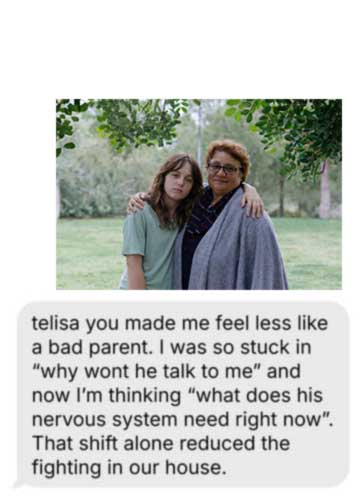
Mrs. Ibazakki adopted her nephew (whom she never knew prior), and struggled with communication from the start. After utilising the tools in this 4-step resource, she has reported massive improvements.
California, USA
NSW, AU
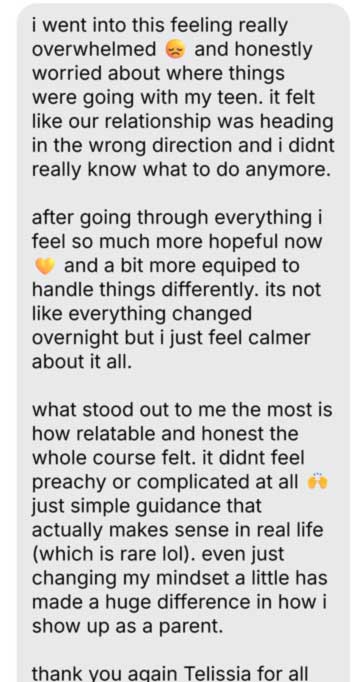
Paige is a dermatologist I met and after hearing I was a speech pathologist, mentioned how she was struggling with her teen being distant and avoiding 'real talk'. She was very open to trying the 4-step resource and had some great results.
Dermatologist - Sunshine Coast, AU
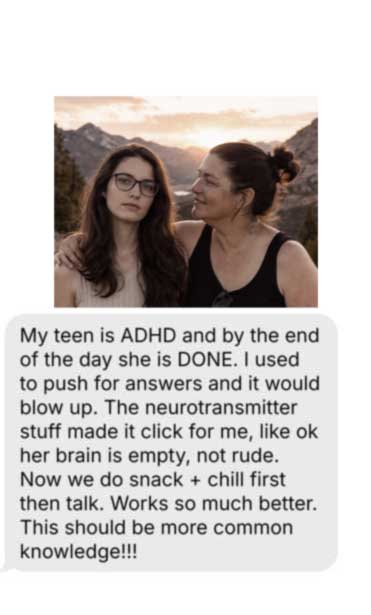
Canada
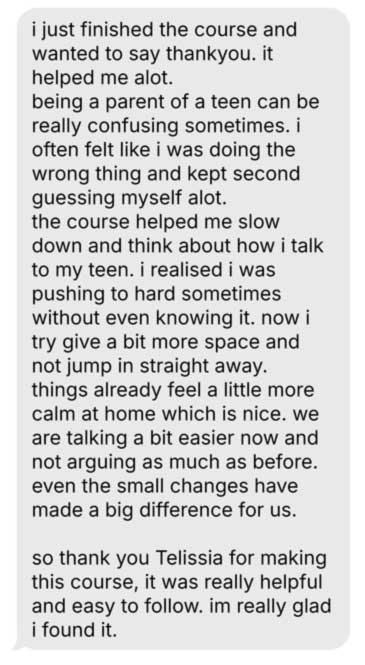
Feedback from social media
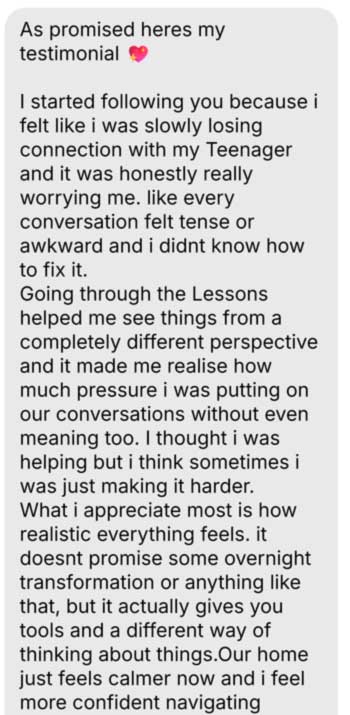
Reached out via social media
This wonderful course has been so beneficial to our family. It’s so helpful to have a few new tools we can use with our neurodivergent son. Telissia makes me feel like I’m not alone and that I can connect with my son in a way I never thought possible. I recommend this to anyone who wants to connect and have a deeper relationship with their children.
Brisbane, AU
Before this course I was constantly second guessing myself, always saying the wrong thing and making him shut down. My 14yo with ADHD would just walk away or mumble. When I started modelling conversation and even uysing the scripts,things started to change. I started talking about just small, kinda stupid everyday stuff after I pick him up (getting him to keep his headphones out was a challenge thoough) and after a few days he'd actually tell me about what happened at school. That never used to happen.
North Carolina, USA
I brought this after seeing the video on facebook and honestly I was skeptical because I had already done speech language pathology for my daughter who would only speak to me if she wanted something, never when she needed help or was having trouble with her online friends. I slowly applied some of the tools from Telissia and things started improving, I think the biggest change was realising that I had to make the effort and change myself first. The original speechie we saw was really no help, I wish we found telissia to begin with!
Victoria, AU
Since we moved from Melbourne for my work, our 17yo was always talking negatively, every single thing we did was bad to her. I saw this course recommended on an autism community page (thanks to whoever shared it!) and someone mentioned there was a lesson on reframing bad conversations, so I brought the course for my wife and I and honestly it actually worked, I don't know if it's because our daughter was sick of us reframing or if she actually started seeing the good in the bad things, but she doesn't complain about stuff any where near as much now. Money well spent!!!
Sunshine Coast, AU
Mother of 3 - 2 sons with ASD level 1 & 2.
NSW, AU
Canada
Reached out via social media
My daughter wouldn't talk to me about about any of the bullying or struggles she was having at school so I tried step 3 about seeing if there were other ways she wanted to communicate and lo and behold she started sending me long texts when she was in her room and I was able to respond to help her deal with things. All it took was me using the script I downloaded and she decided she would be happy to txt me about the d
Washington, USA
My daughter is autistic and would close up to me for days randomly. I could never figure out why, she would never say. When I approached her about changing my mindset and trying to always be available to her, she said that was pretty much the reason she wouldn't talk to me for days on end. I wouldn't listen to her so she stopp appproaching me. I think sometimes it will be hard to always be available but the fact that it meant so much to her and I didn't even realise it is a massive game changer for us, thanks you so much for your expertise
United Kingdom
My 16yo with autism had basically stopped talking to me. One word answers, grunts (or as telisa puts it non verbal) bedroom door alwayed, the lot. Telisia has helped me to know what to do to help him actually talk to me again. the safe-space codeword actually worked...the first time he used it I stopped what I was doing, put my phone away and listened, then told me about some one of his friends at school who showed him inapropriate pictures on his phone. I was so proud of him and so grateful to the codeword tool because I am 100% sure without this tool my boy would not hacve come to me about it. really excited to see if he talks to me more, especially about things at school
San Antonio, USA
Completed the 4-steps as part of her employments personal development.
Occupational Therapist
Mrs. Ibazakki adopted her nephew (whom she never knew prior), and struggled with communication from the start. After utilising the tools in this 4-step resource, she has reported massive improvements.
California, USA
Paige is a dermatologist I met and after hearing I was a speech pathologist, mentioned how she was struggling with her teen being distant and avoiding 'real talk'. She was very open to trying the 4-step resource and had some great results.
Dermatologist - Sunshine Coast, AU
Feedback from social media
See changes from day one.
Save downloadables you can have on-hand when you need them in the moment.
$59.00
Who this is for / not for
✅ This is for: • Parents feeling shut out • Carers supporting overwhelmed teens • Educators navigating resistance or shutdown • Professionals wanting practical communication tools • Adults wanting to progress while on waitlists ❌ This is not for: • People wanting therapy or diagnosis • Crisis mental health support • A quick-fix overnight solution • Replacing intensive clinical intervention for severe or complex cases
Frequently Asked Questions
• Will this help me with my younger children as well? ✅ Absolutely! The tools you’ll learn work just as well for school-age children. • What if my teen doesn’t have ASD/Autism or ADHD? ✅ Good news - this resource is just as effective with neurotypical teenagers. • Can you help with my non-verbal or a ASD Level 3 teen? ❌ No. This resource is designed for teens who are verbal and is suitable up to ASD Level 2. • What if I’m a professional, not a parent? ✅ Many of my students are professionals who work with teens and see great results in classrooms, clinical settings, care facilities, and other support environments.

Meet your instructor
Telissia Gray - Speech Pathologist I’m a practicing Speech Pathologist who works closely with teens facing anxiety, ASD, or ADHD, and with the adults who care about them most, especially parents. Over the years, I kept hearing the same quiet heartbreak from families: “They used to talk to me about everything. Now I get nothing.” Parents described constant power struggles, one-word answers, or discovering something was wrong only after it had escalated. Many blamed themselves or worried their teen simply didn’t trust them anymore. In clinical sessions, I saw a different picture. These young people were not unwilling to connect. Often they were overwhelmed, unsure how to explain what they felt, or afraid of being misunderstood. When the right environment, timing, and language were used, they opened up, sometimes very quickly. I began teaching parents the same practical approaches we use clinically, simple ways to reduce pressure, rebuild trust, and make it easier for their teen to talk. Again and again, parents told me conversations felt calmer, arguments eased, talk-anxiety dropped, and their teen started coming to them voluntarily, including about the hard things. This 4-step approach grew out of that work. It brings together evidence-based tools, clinical communication methods, and mindset shifts that help teens facing anxiety, ASD, or ADHD feel safe enough to open up to you, even about the difficult things. No parent wants to feel shut out from their teen’s inner world, especially during the high school years, when they may need support the most.
Avoid the overwhelm and focus on what works
Evidence-based tools that are easy to understand, realistic to apply, and designed for real life.
$59.00
Learn in just 60 minutes.
Extracted from hundreds of clinical sessions with families and reduced to the essentials that actually help. Move at your own pace, apply one tool or mindset at a time, and notice a difference from day one.

Practical tools that do the talking.
A simple 4-step approach to understanding your teen's silence, knowing when to talk, handling resistance, and creating the kind of connection that makes them want to open up.

The whys, and the hows.
Learn what may be behind your teen's silence, why they seem to choose certain moments to talk, and how to stay connected even when conversation feels impossible.
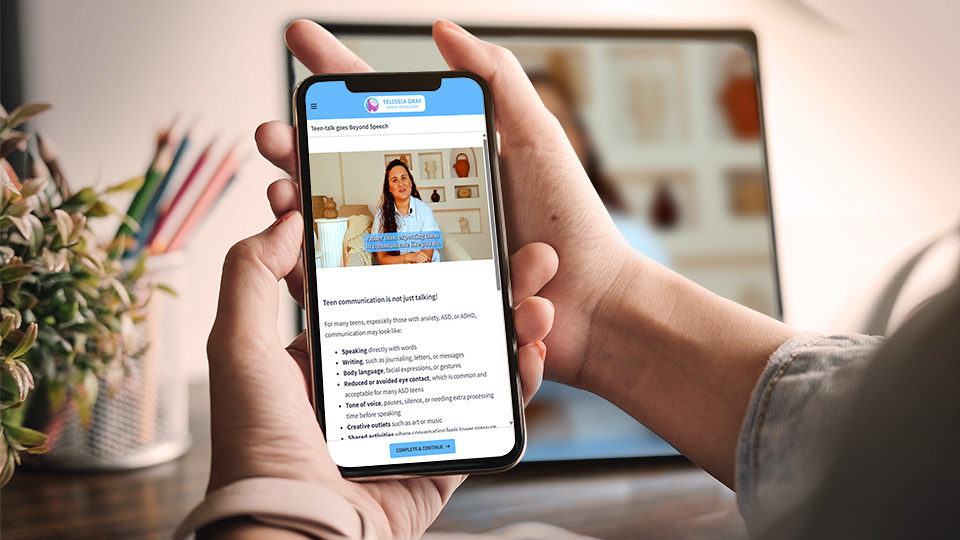
Learn your way: watch, listen, or read.
Designed to fit into real life. Access it on your computer, tablet, or phone, and watch, listen, or read at your own pace, whether you're cooking dinner, doing housework, commuting, on a break, or taking a quiet moment for yourself.
About this 4-step resource
If you’ve ever thought, “Why won’t they talk to me anymore?” or “Why don’t they reach out when something’s wrong?” you’re not alone. Many adults supporting teens, especially those experiencing anxiety, ASD, or ADHD, feel shut out just when their teen seems to need support the most. Conversations that once felt easy can turn into silence, one-word answers, tension, or complete shutdown. They might withdraw, avoid the topic, insist they’re “fine,” or become overwhelmed when someone tries to check in. Pushing harder often makes things worse, leaving everyone frustrated, hurt, or exhausted. Created by a clinical Speech Pathologist, this practical 4-step resource gives you a clear, real-world framework for conversations that reduce pressure and rebuild trust. You'll learn how to recognise when a teen is ready to talk, what to do when they aren't, how to create conditions that feel safe, use language that encourages openness rather than defensiveness, and respond in ways that keep the door open for future conversations. Through short, practical steps, you’ll work through common challenges like shutdowns, avoidance, emotional overwhelm, and conversations that escalate too quickly. You’ll see how small, evidence-based shifts can lead to calmer interactions and more honest communication over time. The resource includes simple scripts, realistic examples, and easy-to-apply tools designed for the adults supporting teens through these challenges. Designed for parents, carers, educators, and professionals, this resource helps you move from constant tension and uncertainty to feeling more confident, calm, and connected. You’ll come away knowing what actually helps, so the teen in your life is more likely to reach out voluntarily, including when things are difficult.
Rebuild trust, repair relationships, and get them talking to you again.
Lifetime access for ongoing learning and refreshers.
$59.00